Thinking about a new condo or rehabbed townhome in Italian Village and wondering how the tax abatement plays into your monthly budget? You are not alone. CRA tax abatements can lower your carrying costs in a real way, but only if you understand what is covered, what is not, and how to verify the details before you buy. This guide breaks down how abatements work in Columbus, what to check on a specific property, and how to run a quick savings estimate. Let’s dive in.
What is a CRA abatement
A Community Reinvestment Area, or CRA, is a local program under Ohio law that reduces property taxes on the value added by qualified improvements. Think new construction or substantial renovation. The abatement applies to the increase in assessed value created by that work. It does not remove taxes on the original value of the land or existing structure.
Cities create CRAs by ordinance and administer them locally. In Columbus, the city sets program terms like the length of the abatement and the percentage of the improvement that is exempt. The Franklin County Auditor then applies the exemption on the tax bill once the city issues the formal certificate.
The typical range in Ohio is multi-year, often 5 to 15 years. Many programs offer a 100 percent exemption on the improvement value during the term. Terms vary by neighborhood and project type, so plan to confirm the specifics for any Italian Village address.
Where Italian Village fits
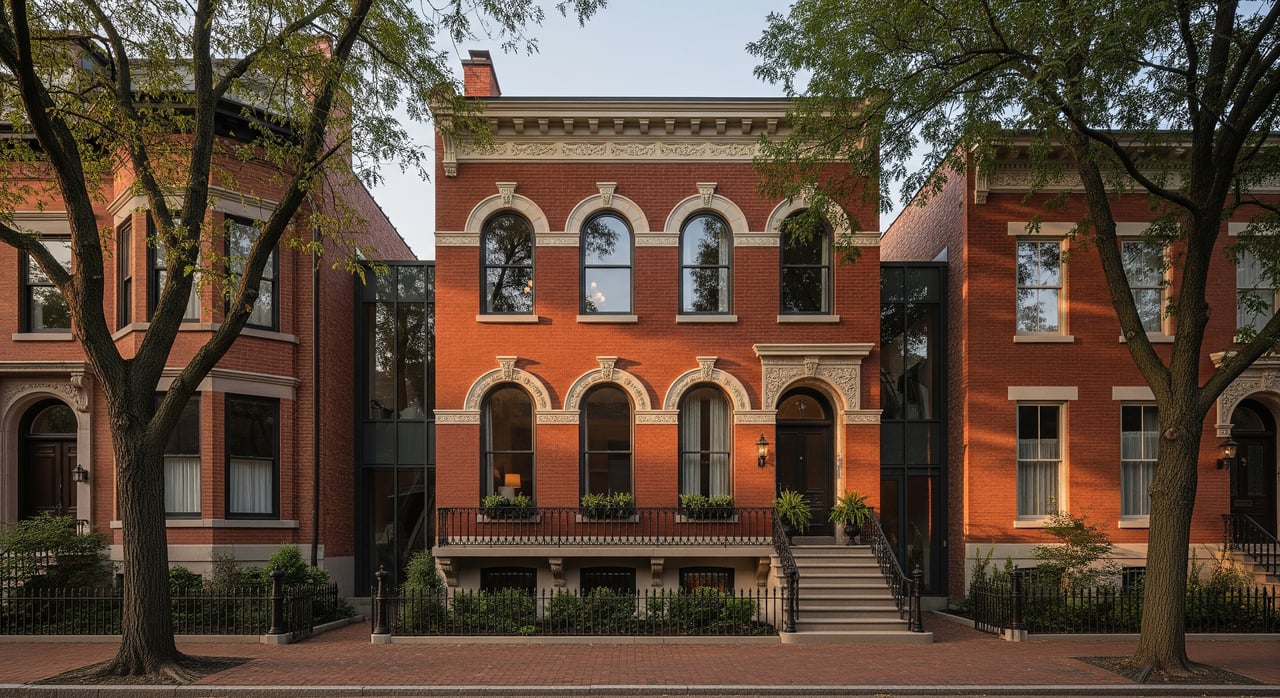
Italian Village is part of Columbus’s urban core with a mix of new infill and renovated historic homes. Portions of the neighborhood fall within Columbus’s CRA boundaries, which means new builds and qualifying rehabs can receive abatements when they meet program rules. The exact terms depend on the city ordinance that covers the parcel.
The key point: coverage is not automatic. You must verify whether a specific address is inside a CRA and whether an abatement is already active on that parcel.
How to confirm a property’s abatement
Your goal is to match a specific property to a recorded exemption and its terms. Follow this workflow:
- Ask the seller or listing agent for the CRA exemption certificate, any recorded abatement agreement, and the ordinance number that authorized it.
- Check the Franklin County Auditor parcel page for current assessed value, tax history, and any listed exemptions tied to the parcel.
- Contact the City of Columbus Department of Development to confirm program rules for Italian Village parcels and to verify issuance of the certificate.
- Review recent tax bills to see whether the abatement is already reflected, or if there may be a timing lag.
If the records do not align, pause and clarify before you rely on projected tax savings.
Eligibility and terms to verify
Every abatement has rules. Confirm these items during due diligence:
- Project type: Was it new construction or a qualified rehabilitation that meets the program’s requirements?
- Owner-occupancy: Some abatements apply only to owner-occupied units, or have different terms for rentals.
- Application timing: The owner or developer usually must apply and supply permits and final inspections within a set time.
- Transferability: Many abatements run with the property for the remaining term, but verify that the agreement allows transfer on sale.
- Restrictions and clawbacks: Some agreements include use covenants. Violations can trigger termination or repayment.
How abatements change taxes
In Ohio, property taxes are based on assessed value. Historically, assessed value equals 35 percent of market value, then local millage is applied to compute taxes. A CRA abatement exempts the increase in assessed value that results from the qualified improvement, for the term of the abatement. Taxes on the original value continue.
What this means for you: your monthly tax bill can be lower during the abatement term because the improvement portion is exempt. After the term ends, taxes increase as the exemption falls off.
Quick 6-step estimate
Use this method to estimate monthly savings on a given Italian Village property:
- Pull the current assessed value and annual tax from the Franklin County Auditor.
- Get the projected or recorded post-improvement market value. Convert to assessed value using the 35 percent assessment ratio as a working assumption.
- Subtract the original assessed value from the post-improvement assessed value to find the incremental assessed value.
- Confirm the abatement percentage on that increment and the term in years.
- Apply the local millage to calculate annual taxes with and without the exemption on the increment.
- Divide the difference by 12 to estimate monthly savings.
Hypothetical example
Here is a simple illustration using round numbers:
- Original market value: 300,000. Assessed value at 35 percent: 105,000.
- Post-improvement market value: 400,000. Assessed value: 140,000.
- Incremental assessed value: 35,000.
- Local effective rate example: 120 mills, which equals 120 dollars per 1,000 of assessed value.
- Abatement: 100 percent of the increment for 10 years.
Annual tax on the increment without abatement would be 35,000 divided by 1,000 times 120 equals 4,200. That is about 350 per month. With a full abatement on the increment, you would avoid that 350 per month during the term. When the abatement ends, plan for that amount to return to your monthly budget, subject to actual millage and assessed values at that time.
Benefits and trade-offs for buyers
Buying with an active CRA abatement can make a higher-priced new build or top-to-bottom renovation more affordable in the near term. Lower monthly taxes on the improvement value can help you bridge the gap between a new condo or townhome and an older home without an abatement.
There are trade-offs. The tax bill steps up when the abatement expires, which can affect long-term affordability and resale. If an agreement requires owner occupancy and you plan to rent later, you could face limits or loss of the benefit. Lenders may also escrow based on pre-abatement taxes until the certificate is reflected in county records.
Buyer checklist and who to call
Before you sign, gather and review:
- CRA exemption certificate or recorded abatement agreement for the parcel
- The city ordinance or council resolution authorizing the program
- Building permits and final inspection records tied to the improvement
- Recent tax bills and the Auditor’s assessed value history
- Any owner-occupancy covenants or use restrictions
Key contacts who can confirm details:
- Listing agent and seller for paperwork and timeline of issuance
- City of Columbus Department of Development for program rules and certificate status
- Franklin County Auditor for parcel-level exemptions, assessed value, and millage
- Your lender for escrow treatment and timing
- Your title company to confirm the exemption is recorded and transferable at closing
Plan for abatement expiration
Map the remaining term and model your budget at expiration. If you have seven years left, project your payment with and without the abatement so there are no surprises. If you expect to sell before the end of the term, consider how many years remain and how that might influence buyer demand and pricing.
Common pitfalls to avoid
- Assuming an abatement exists without documentation. Always verify the recorded certificate.
- Forgetting owner-occupancy rules. If required and you rent, you may lose the benefit.
- Overestimating savings. Use actual assessed values and millage rates, not rough guesses.
- Ignoring escrow timing. Ask your lender how they will handle taxes if the exemption has not posted yet.
The bottom line for Italian Village buyers
A CRA abatement can meaningfully reduce your monthly tax bill by exempting the improvement value for a set term. The savings can make urban living in Italian Village more attainable. The key is due diligence. Confirm the parcel’s coverage, read the agreement, run the numbers, and plan for the step-up when the term ends.
If you want a clear, property-specific picture, reach out. I can help you pull the right records, coordinate with the city and county, and compare options so you can buy with confidence. Connect with Seth Janitzki to get started.
FAQs
What is a CRA tax abatement in Columbus?
- It is a local incentive that exempts the increase in assessed value created by qualified new construction or rehabilitation for a set term while taxes on the original value continue.
How do I check if an Italian Village property has an abatement?
- Request the CRA certificate from the seller, review the Franklin County Auditor parcel page for exemptions, and confirm details with the City of Columbus Department of Development.
Do abatements transfer to me when I buy?
- Many do, but you must verify that the recorded agreement runs with the property and confirm any conditions like owner occupancy before relying on the benefit.
How long do abatement terms last in Italian Village?
- Terms are set by city ordinance and can vary by project and location, often within a 5 to 15 year range for Ohio programs, so confirm the exact term on the parcel.
How much can I save each month?
- Savings depend on the incremental assessed value, the local millage, and the abatement percentage; a quick calculation using county data can estimate your monthly impact.
What happens when the abatement ends?
- Your tax bill increases as the exempt improvement value becomes taxable; build this step-up into your long-term budget and resale planning.
Can I rent out a home with an abatement?
- Some abatements require owner occupancy or include use restrictions; renting in violation of the agreement can lead to termination or repayment, so check the recorded terms.